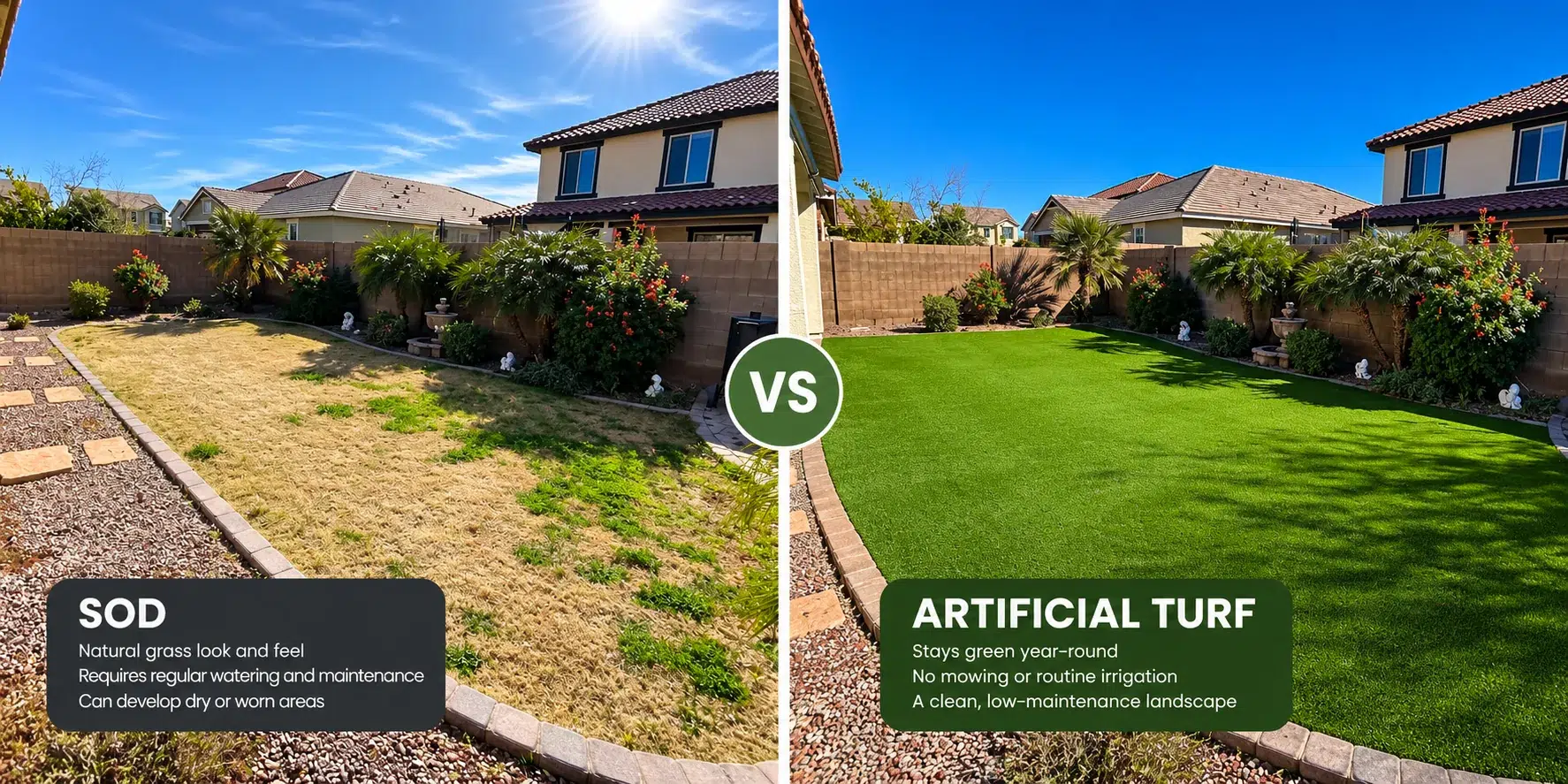
Sod or Artificial Turf: Which One Should You Choose?
Sod or Artificial Turf: Which One Should You Choose?
When you’re deciding between sod and artificial turf, there is more to consider than how the finished lawn will look. Water use, ongoing maintenance, upfront cost, heat, durability and how you plan to use the space can all make a difference. Both options have advantages, especially depending on the property and your priorities. In this guide, we’ll compare artificial turf and natural sod to help you decide which option makes the most sense for your Arizona landscape.
Understanding Artificial Turf
Artificial turf, also known as synthetic grass, is made with synthetic fibers designed to create the appearance of natural grass without the watering, mowing and routine lawn care that living grass requires.
Today’s turf comes in a wide range of blade shapes, colors, pile heights and densities, so the right product depends on where and how it will be used. A backyard with kids and pets may need something different from a front yard, putting green or high traffic area.
The turf itself is also only one part of the finished system. Proper base preparation, drainage, infill and installation all play a role in how the finished area looks and performs.
Pros of Artificial Turf
- Uses significantly less routine irrigation than natural grass
- No mowing or fertilizing required
- Stays green throughout the year
- Available in different styles for lawns, pets, play areas and other applications
- Can handle regular foot traffic when the right product is selected
- Reduces many of the ongoing maintenance requirements of natural grass
Cons of Artificial Turf
- Higher upfront cost than sod in many cases
- Can become hot in direct Arizona sunlight
- Does not feel exactly the same as living grass
- Still requires routine cleaning, debris removal and occasional brushing
- Product selection and proper installation matter for drainage and long term performance
Understanding Sod
Sod is natural grass that has already been grown and is installed in sections over prepared soil. It gives you the look and feel of a natural lawn much faster than growing grass from seed, but it still needs time to establish its root system.
In Arizona, choosing sod also means planning for irrigation, mowing, fertilizing and seasonal care. The amount of maintenance and water needed will depend on the grass variety, time of year, sun exposure and condition of the lawn.
Pros of Sod
- Natural grass look and feel
- Naturally cooler underfoot than artificial turf
- Lower initial material cost in many situations
- Living grass can provide environmental benefits
- Damaged areas can often be repaired or replaced
Cons of Sod
- Requires regular irrigation
- Needs mowing and other routine lawn care
- May require fertilizer and pest or disease management
- Can develop brown, thin or damaged areas
- Heavy traffic and pets can be hard on some lawns
- Arizona heat and seasonal conditions can affect appearance and water needs
Artificial Turf vs. Sod: What Should You Consider?
There isn’t one factor that determines which option is right for every yard. Cost, maintenance, water use, heat, appearance and how the space will be used should all be part of the decision.
Upfront and Ongoing Costs
Sod will generally have a lower upfront material cost than a complete artificial turf project. Artificial turf requires a larger initial investment because the project may include site preparation, base material, turf, infill and installation materials.
The difference comes after installation. Natural grass continues to require water, mowing and other lawn care. Artificial turf eliminates many of those recurring expenses, although it still needs routine cleaning and maintenance.
When comparing costs, also consider the expected lifespan and warranty of the specific turf product you’re considering rather than assuming every artificial turf product will last the same amount of time.
Maintenance
Artificial turf requires less routine maintenance than natural sod, but it isn’t maintenance free. Leaves and debris should be removed, high traffic areas may need brushing, and the turf should be rinsed and cleaned as needed. Pet areas can require more frequent cleaning.
Sod requires regular mowing, irrigation and lawn care to stay healthy. Depending on the grass and property, that can also include fertilizing, aeration, weed control and pest or disease management.
Water Use
Water use is one of the biggest differences between artificial turf and natural grass in Arizona. Once installed, artificial turf does not require routine irrigation to stay green. Water may still be used occasionally for cleaning or rinsing, particularly in pet areas.
Natural grass requires regular irrigation, and the amount of water needed can change depending on the type of grass, season, weather and condition of the lawn.
The Arizona Department of Water Resources offers additional information about outdoor water use and water-efficient landscaping in Arizona. ADWR notes that landscaping can account for a significant portion of residential water use, making irrigation needs an important consideration when choosing a landscape surface. Arizona Department of Water Resources
You can also review local information from the City of Peoria about artificial turf and water conservation.
Appearance
Artificial turf stays green throughout the year without relying on watering or seasonal growing conditions. Different turf products can look noticeably different, which is why we recommend comparing actual samples rather than choosing turf based only on photos online.
Natural sod gives you the look, feel and variation of living grass. Its appearance can change with the season, weather, irrigation and overall health of the lawn.
Neither is automatically the right choice based on appearance alone. It really comes down to the look you prefer and how much lawn care you want to take on.
Heat
Heat is an important consideration in Arizona.
Natural grass generally stays cooler because it contains moisture and releases water through evapotranspiration. Artificial turf can become hot in direct sunlight, particularly during Arizona summers.
Turf color, fiber construction, infill, shade and cooling technology can all affect surface temperature, but artificial turf should not be expected to stay cool during hot summer conditions.
If heat is a concern for your project, read our guide Does Artificial Turf in Arizona Get Hot? What to Know for a closer look at Arizona heat, turf temperatures and ways to plan your space.
Durability and Traffic
Think about how the area will actually be used.
Artificial turf can be a good option for yards that receive regular foot traffic because you can select a product based on the application and expected level of use. Different products are available for residential lawns, pet areas, play spaces and other applications.
Natural grass can recover and regrow when properly maintained, but heavy traffic, pets and repeated use can also create worn or bare areas.
For either option, consider who will use the space, how often they’ll use it and whether pets or children will regularly be in the area.
Environmental Considerations
There are environmental considerations with both options.
Natural grass is a living landscape, but maintaining it in Arizona can require regular irrigation, mowing, fertilizer and other lawn care. Arizona water officials recommend reducing water-intensive landscaping and using water-efficient landscape practices as part of the state’s broader conservation efforts. Arizona Department of Water Resources
Artificial turf does not require routine irrigation to remain green and eliminates the need for mowing. It may still use water for cleaning and cooling, and environmental features can vary by turf product and manufacturer.
You can learn more in our guide to the environmental benefits of artificial turf.
Installation: Artificial Turf vs. Sod
Installation is another important difference between the two options.
Artificial Turf Installation
A typical artificial turf project may include:
- Removing existing grass or landscaping
- Preparing and compacting the base
- Planning for proper drainage
- Cutting and positioning the turf
- Securing seams and edges
- Applying the appropriate infill
- Brushing and finishing the surface
Exact installation requirements depend on the property, turf product and intended use.
No Limit Turf supplies the turf, infill and installation materials needed for artificial turf projects. We do not provide installation services, but we can recommend independent local installers if you need help with your project.
Sod Installation
A typical sod project may include:
- Removing existing grass and preparing the soil
- Grading and leveling the area
- Installing fresh sod
- Staggering and fitting the sections
- Rolling the sod for soil contact
- Watering thoroughly
- Following an establishment watering schedule while roots develop
Even though sod provides an established lawn quickly, newly installed sod still needs time, water and care for the roots to establish.
Maintenance Requirements
Both surfaces require some level of care, but the type and amount of maintenance are very different.
Artificial Turf Maintenance
Artificial turf doesn’t need mowing or regular irrigation, but some maintenance is still important.
- Remove leaves and debris
- Rinse when needed
- Brush fibers in high traffic areas as needed
- Clean pet areas regularly
- Address stains, odors or damaged areas when they occur
Keeping up with basic maintenance can help your turf continue to look its best over time.
Sod Maintenance
Natural sod requires ongoing lawn care, which may include:
- Regular watering
- Mowing during the growing season
- Fertilizing based on the grass variety
- Weed management
- Aeration or dethatching when needed
- Pest and disease management
- Repairing thin or damaged areas
The amount of work will depend on the grass variety, season and condition of the lawn.
Frequently Asked Questions
Is artificial turf the same as sod?
No. Artificial turf is made from synthetic materials designed to create the appearance of grass, while sod is living grass grown and harvested with its roots and a layer of soil.
Is artificial turf or sod cheaper?
Sod usually costs less upfront, while artificial turf typically requires a larger initial investment. The long term cost depends on the size of the area, installation, water rates, lawn care expenses and how long you plan to keep the landscape.
Artificial turf eliminates many recurring lawn expenses such as mowing and routine irrigation, while sod requires continued care to stay healthy.
Does artificial turf require maintenance?
Yes, but it generally requires less routine maintenance than natural grass. Artificial turf should still be kept free of debris, rinsed or cleaned when needed and brushed in high traffic areas. Pet turf may require more frequent cleaning.
Does artificial turf get hot in Arizona?
Yes. Artificial turf can become hot when exposed to direct sunlight during Arizona summers. Shade, turf construction, infill and cooling technologies can affect surface temperatures, but no turf should be expected to remain cool in extreme heat.
For more information, see Does Artificial Turf in Arizona Get Hot? What to Know.
Is artificial turf good for pets?
Artificial turf can be a good option for pet areas when the right turf, drainage system and infill are selected. Pet areas also need regular cleaning and rinsing to help control odors and keep the surface clean.
How long does artificial turf last compared with sod?
The lifespan of artificial turf varies by product, amount of traffic, installation and maintenance. Check the specifications and warranty for the particular turf you’re considering rather than relying on one lifespan estimate for every product.
Natural sod is a living lawn and does not have a set product lifespan, but it requires ongoing care and may need repair or replacement in areas that become damaged.
Which One Is Right for Your Yard?
There isn’t one answer that works for every property.
If you enjoy natural grass, don’t mind the maintenance and want a living lawn that stays cooler underfoot, sod may make sense for your yard.
If your priorities are reducing routine water use, eliminating mowing and keeping a consistently green lawn throughout the year, artificial turf may be the better fit.
For Arizona homeowners, water use, sun exposure, pets, traffic and how you actually use your yard are all worth considering before making the decision.
If you decide artificial turf is right for your project, our guide to choosing the right turf for your landscape can help you understand some of the options. No Limit Turf can also help you compare products for your space and determine how much turf, infill and installation material you’ll need.
Contractors can also learn more about how No Limit Turf simplifies the ordering process.
My recommended new external link
I would add the Arizona Department of Water Resources landscaping page exactly where I placed it in the Water Use section. It’s a strong external source for this article because it’s an Arizona government source, directly relevant to the topic, and ADWR specifically provides guidance on outdoor water use, lawns and water-efficient landscaping. Arizona Department of Water Resources